
Are you interested in spotting Sloths in the Amazon Rainforest of Peru?
One of the most friendly and cute animal species that we can interact with in the entire Amazon Rainforest, Sloths are usually one of the most popular animals for tourists to seek out during jungle tours. However it’s important to know that they are not guaranteed spots on every tour – and as such it’s important to read on to learn about their behaviour, the different types of Sloth species here, and how to give yourself the best chance of seeing them.
In this comprehensive guide we’ll explore everything you need to know about Sloths in the Amazon Rainforest. This includes their physical characteristics and variety of species, whether they are common species to spot, and how to maximise your own chances of seeing them. We’ll also answer your most frequently asked questions in our FAQ section.
Everything You Need To Know About Sloths In The Amazon
Physical Characteristics Of The Sloth
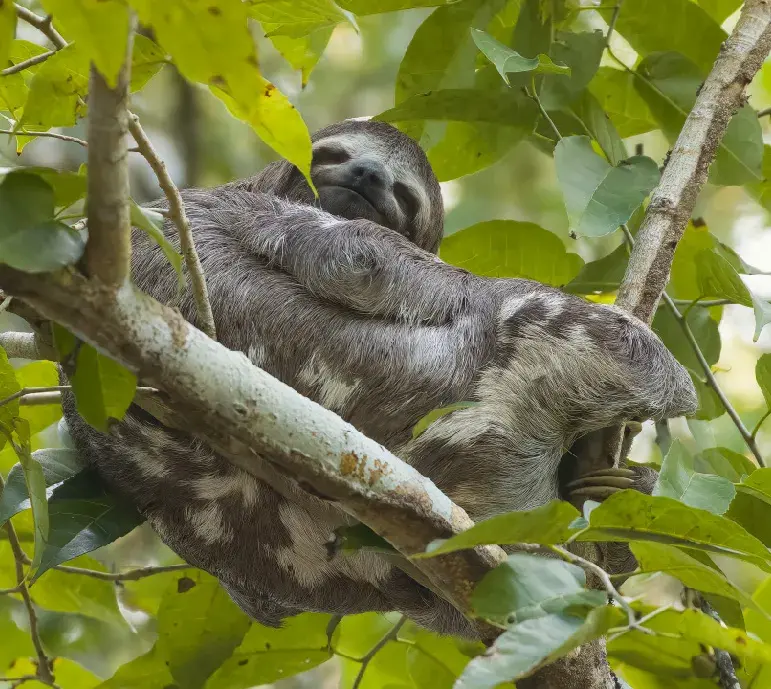
Spending almost its entire life hanging upside down in the jungle canopy, the Sloth is one of the most iconic animals to spot in the Amazon Rainforest. Out of the six species that exist in Central and South America, just two are found in the Amazon – the Linnaeus’s Two-toed Sloth and the Brown-throated Three-toed Sloth. Measuring up to 50-75cm in length, they easily survive on a low calorie diet of leaves given they conserve energy through slow movements.
Sloths are renowned for their incredibly strong limbs and tendons which allows them to hang upside down almost their entire life, which easily support them as they eat, sleep and even give birth to new baby Sloths. They are also a mutualistic species, where their thick fur allows algae to grow – which provides a habitat for various insects, while giving them a green tint which allows them to better camouflage within the canopy.
- Number Of Species: 6 (2 Which Are Endemic To The Amazon Rainforest
- Location: Amazon Jungle And Other Tropical Forests Of Central And South America
- Size: 50-75cm
- Colour: Grey Or Brown Fur (Some With A Greenish Tint Due To Algae Growth)
- Lifespan: 20-30 Years In The Wild
- Reproduction: Usually Once A Year, After A Gestation Period Of Around 6-12 Months
- Early Life: Babies Cling To Mother’s Fur For The First 6 Months
Sloths: How They Have Adapted To Become Nature’s Masters Of Slow Living
Sloths, scientifically classified in the suborder Folivora, are renowned for being the world’s slowest-moving mammals. These tree-dwelling, herbivorous animals are primarily found in the tropical rainforests of Central and South America. They come in two primary types: two-toed sloths and three-toed sloths. Both varieties exhibit remarkable features that make them truly one-of-a-kind:
Slow Locomotion
Sloths have an incredibly slow metabolism and, as a result, move at an astonishingly leisurely pace. This leisurely movement is an adaptation to their low-energy diet of leaves, which takes a while to digest. It’s a survival strategy in a world where speed often means vulnerability.
Extraordinary Climbers
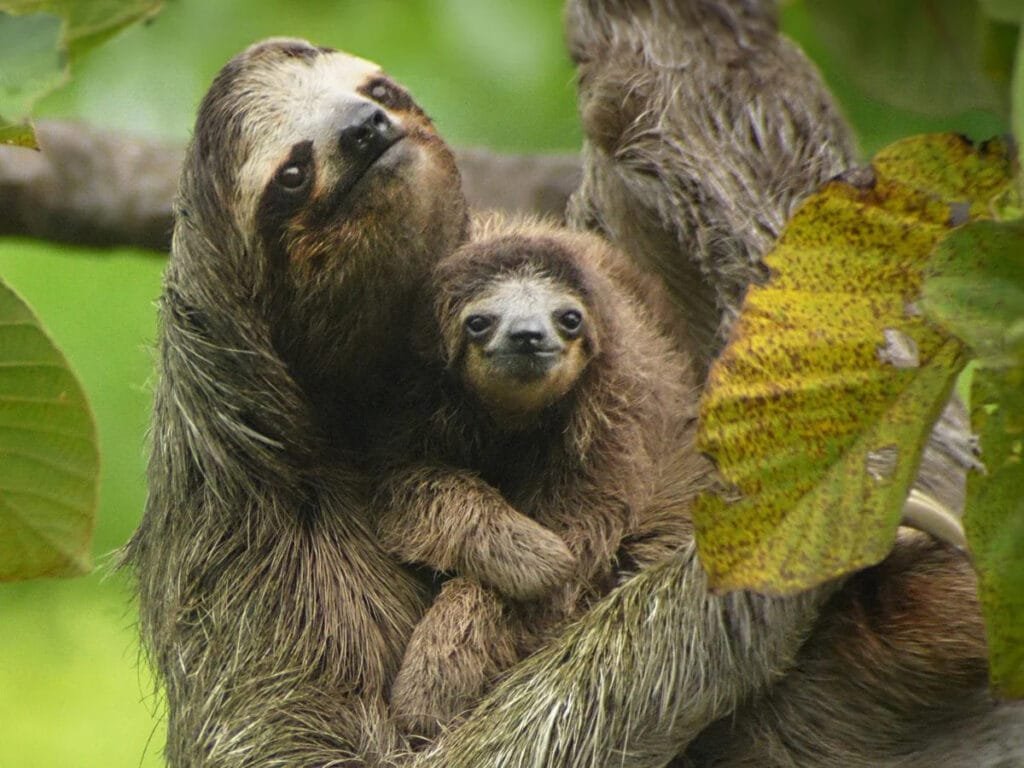
Sloths are remarkable climbers, and they spend the majority of their lives in trees. Their long claws and specialized limb structure enable them to hang upside-down and move with ease from branch to branch.
Camouflage Experts
Their fur is home to a unique type of algae that lends them a greenish hue, making them nearly invisible among the leaves. This built-in camouflage helps protect them from predators.
Elusive Nocturnal Creatures
Sloths are primarily nocturnal, making them a bit more challenging to spot during the day. Nighttime hikes in the Tambopata National Reserve can yield memorable encounters with these gentle giants.
Are Sloths Common Sightings In Peru?
While the two species of Sloths in the Amazon can be seen throughout the Peruvian Rainforest, it’s important to know that they are not guaranteed sightings in the wild 100% of the time. Various factors can affect how active they are, such as levels of rainfall, how busy and loud certain jungle trails are, the season, whether they have an abundant food source in a certain area and so on.
However they can definitely be one of the easier Amazon Rainforest animals to spot on a jungle tour – given they are more predictable and slower-moving when compared with more elusive species such as Jaguars, Coati, Tapir and Ocelots. This is especially so when doing everything you can to maximise your chances of spotting them, which we’ll now take a look at in the next section.
How To Maximise Sightings Of Sloths In The Peruvian Amazon Rainforest
While Sloths can be found all over the Amazon Rainforest region in South America, certain countries like Peru are renowned for consistent sightings.
Choosing quiet areas with high rainforest canopy is best for spotting Sloths in the Amazon, and especially in areas like Puerto Maldonado and the Manu National Park. Here canopy towers allow us to see them at eye-to-eye level – which are best during the dry season months between May and October (where they are more easily visible due to thinner leaves and as they prefer to come out to sunbathe).
Visiting the Peruvian Amazon with a certified expert guide is also crucial for maximising the number of sightings and interactions you have, given guides are experienced in locating these well-camouflaged animals. Here at TroncoTambopata we include the very best guides on our Three Day Tambopata Amazon Jungle Tour – where you can enjoy our jungle walks which are great for spotting Sloths.
Ready To Visit The Amazon And Meet The Sloth?
Ready to embark on an adventure of a lifetime and witness sloths in their natural habitat? Join our Tambopata National Reserve guided tour to explore the captivating world of these unique creatures. Book your tour today and get ready to make memories that will last a lifetime.
Sloths are truly remarkable creatures, exemplifying nature’s ingenuity and the marvels of evolution. In the pristine rainforests of Tambopata National Reserve, you have the opportunity to connect with these gentle giants, observing them in their natural environment. Don’t miss the chance to be a part of this extraordinary experience.
Frequently Asked Questions About Sloths In The Amazon Rainforest
In this section we’ll now explore the most frequent questions we get about Sloths in the Amazon Rainforest, as well as anything else you need to know.
How Many Species Of Amazon Rainforest Sloth Are There?
There are only two species of Amazon Rainforest Sloths found in this vast region. The first is the Linnaeus’s Two-toed Sloth, which is the largest, has lighter fur and is strictly nocturnal. The second is the Brown-throated Three-toed Sloth, which is smaller and darker, and is easier to spot as it’s active during the daytime. Both of these Sloth species can be found throughout the Peruvian Amazon Rainforest, and prefer larger canopies.
Are There Sloths in Peru?
Absolutely. The lush rainforest of the Tambopata National Reserve in southeastern Peru is home to both two-toed and three-toed sloths, making it one of the rare places where you can observe these slow-moving tree-dwellers in their natural environment. These creatures spend most of their lives hanging quietly in the forest canopy, blending into leafy branches as they munch on foliage and drift with the treetop breeze. The reserve’s rich biodiversity and relatively low number of visitors increase your chances of spotting a sloth during a guided jungle walk or canopy trail excursion.
Where Can I See Sloths In Peru?
Sloths are best spotted in lowland Amazon areas, which are further east than the higher altitude Andes mountain range. Puerto Maldonado and Iquitos are the very best for spotting them either from lookout towers over the rainforest canopy, or on deeper boat rides as they hang close to the river’s edge. It’s also possible to spot them in the Manu National Park – but best in the lower altitude Reserved Zone during a guided boat tour.
Did Giant Sloths Live In The Amazon?
Yes, Giant Sloths once lived in the Amazon some several hundreds of thousands of years ago during the Miocene and Pleistocene epochs. Measuring between 3-6 meters in height (anywhere from the size of a grizzly bear to an elephant), several fossil findings confirmed that this giant Sloth really existed which can be found in several museums across the continent – and is estimated to have weighed up to an astonishing 8800 pounds!
Overview Of Sloths In The Amazon
And that’s all for this guide on everything you need to know about Sloths in the Amazon.
One of the most famous and popular Amazonian species to spot, Sloths can be found hanging from branches and basking in sunlight in many regions – and are typically curious when humans are around. Thankfully they are easy to spot within the Peruvian Amazon, and especially when heading with local expert guides who know how and where it is best to find them during a jungle tour.
Ready to explore the Peruvian Amazon and see some of the most incredible animal species? Here at TroncoTambopata we operate an Unforgettable 3 Day Jungle Tour In Tambopata – where you’ll head deep into the rainforest with our expert guides, have private transport as well as all rainforest lodging included.