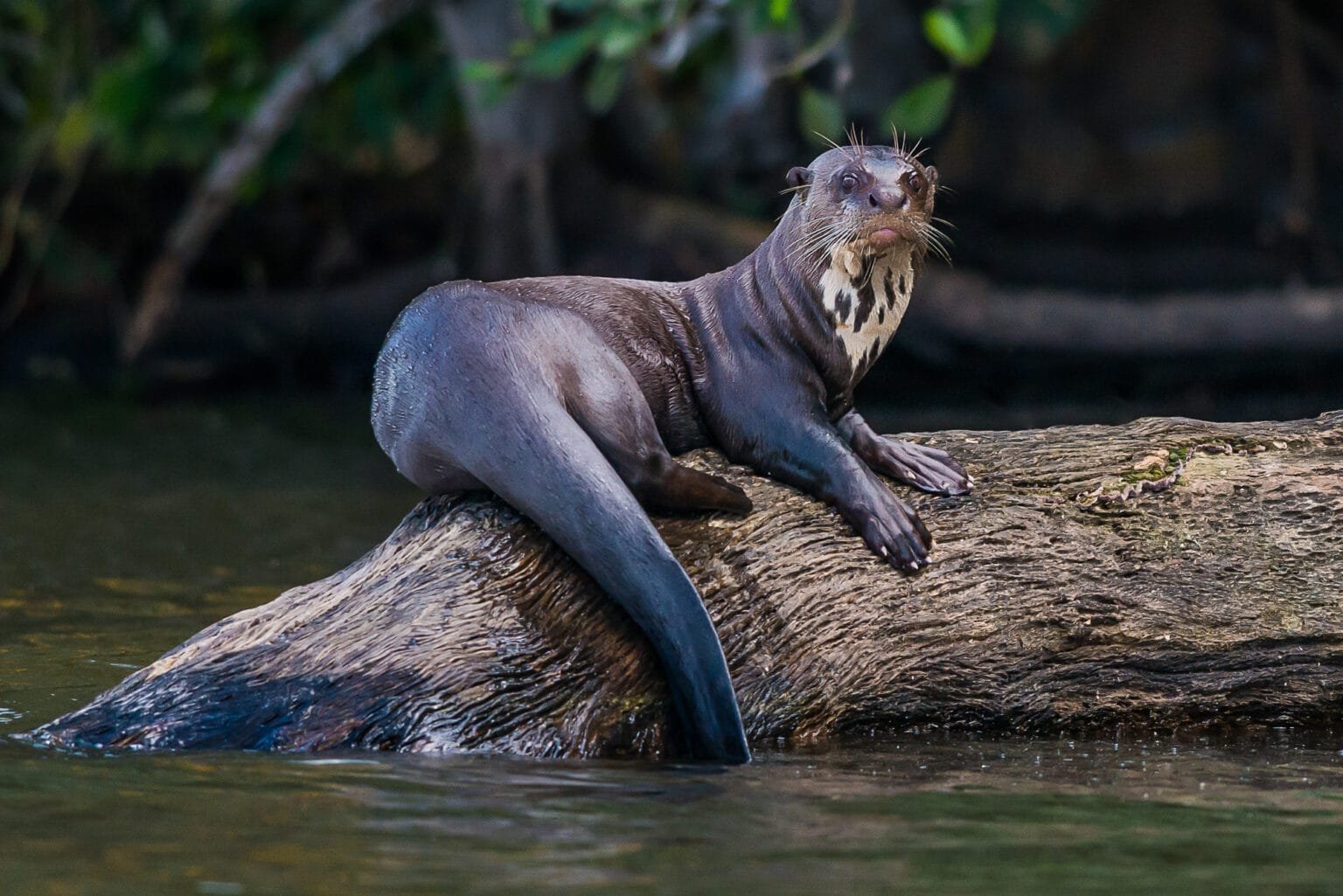
Have you heard of the Giant River Otter?
In the heart of the Amazon rainforest, amidst the lush greenery and winding waterways of Tambopata National Reserve, dwells one of the most captivating and enigmatic creatures of the wild – the Giant River Otter. Known for its impressive size and aggressive nature, it is one of the river’s major apex predators – making it a joy to spot on specialized tours that visit the unique ecosystems that are home to them.
In this comprehensive guide we’ll explore everything you need to know about Giant River Otters in the Amazon Rainforest. This includes their physical characteristics and where to best spot them, as well as how to maximise your own chances of seeing them. We’ll also answer your most frequently asked questions in our FAQ section.
Everything You Need To Know About The Amazon River Otter
Giant River Otters, scientifically known as Pteronura brasiliensis, are the largest otter species on Earth. These charismatic aquatic mammals boast a remarkable set of features that make them an iconic presence in the Amazon rainforest. Giant River Otters are known for their impressive size, with adults measuring between 4.6 and 5.9 feet (1.4 to 1.8 meters) in length, including their tail. Their sleek, elongated bodies are covered in dense, velvety fur that varies in color from brown to dark gray. They have distinctive white patches on their throats, chests, and upper lips, which often help identify individuals.
While sharing the same name as other river otter species, it’s important to know that Giant River Otters are very different. As well as being much larger in size (usual River otters measure 1-1.3m, compared with the Giant River Otter’s 1.4-1.8m), they are also more aggressive and socially competitive. During a Tambopata Jungle Tour In Peru it’s common to see them growling and howling at each other – which helped it earn its local name as the Wolf of the River.
- Location: Freshwater Rivers And Lakes In The Amazon Of South America
- Size: 1.4-1.8m
- Colour: Dark Brown Fur With A Distinct White Throat Patch
- Lifespan: 10-13 Years In The Wild
- Reproduction: Baby Otters Are Born After 60-65 Days, With Females Giving Birth To A Litter Of 1-5 Pups
- Early Life: Newborn Pups Are Born Blind And Cannot See The First Months, Nor Can Swim Until They Are 3-4 Months Old
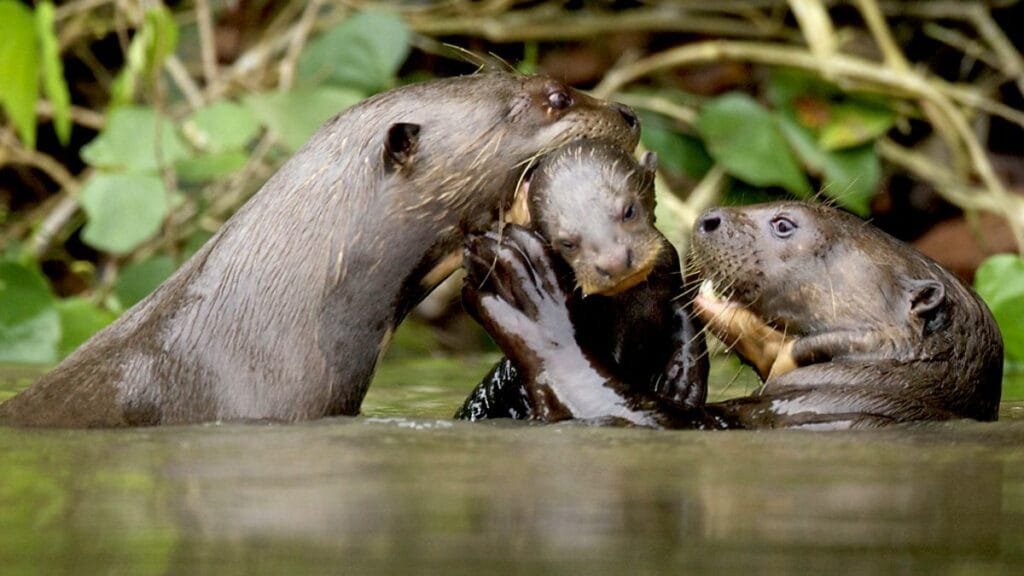
The Majestic Giant River Otter: Unique Features And Adaptations
Below let’s now take a look at what makes the Amazon River Otter unique – and an especially formidable predator in the Amazon environment.
Social Behavior
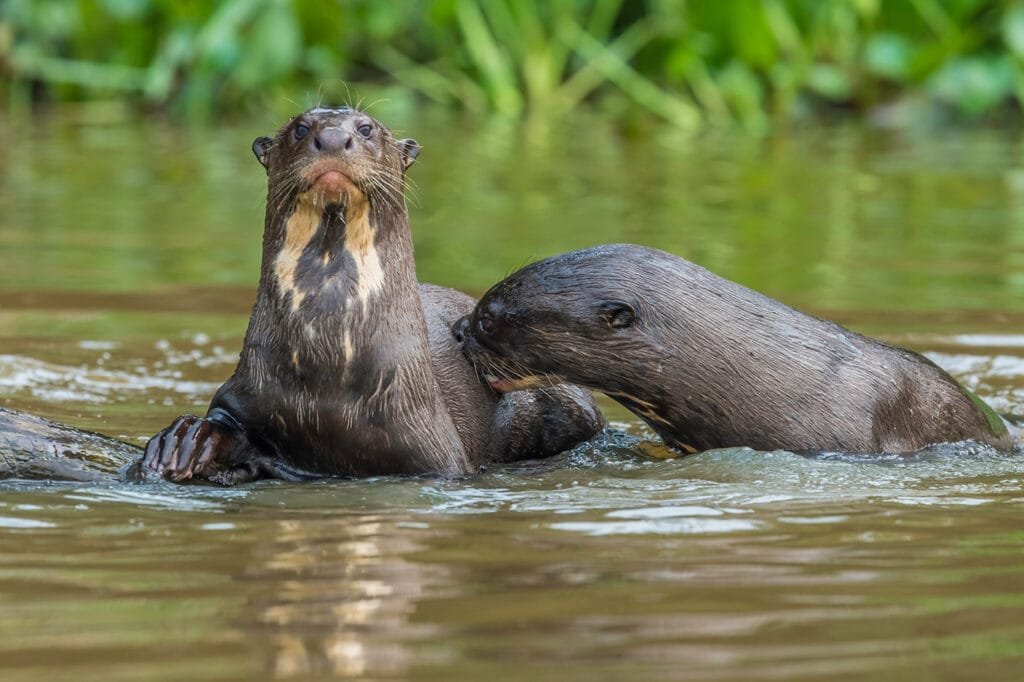
These otters are highly social animals, often found in family groups that can comprise up to 20 individuals. Family groups typically consist of a breeding pair and their earlier offspring from the last few years, where older juveniles help to care for younger pups. This strong social structure is most important when hunting, as they can work together to drive fish into shallow and confined areas – making them easier to catch. Giant River Otters are also highly territorial and will actively defend their colony from rival groups, as well as predatory animals. During tours we can watch them swimming together, grooming each other as well as hear their trademark howls and whistles. They communicate using a variety of vocalizations, including whistles, barks, and growls, which are essential for coordinating group activities like hunting and defending their territory.
Habitat And Range
Giant River Otters are found exclusively in South America, inhabiting the Amazon, Orinoco, and La Plata river systems. Amazon River Otters prefer slow-moving rivers, streams, oxbow lakes and lagoons with abundant fish and dense vegetation along the shores. These waterways not only provide easier hunting grounds, but also safer places to raise their young and take shelter from predators. Tambopata National Reserve, nestled in the heart of the Peruvian Amazon, is one of the prime locations to observe these incredible creatures in their natural habitat. This extensive network of rivers, lakes and flooded forests provide ideal conditions for Giant River Otters. They particularly like the large oxbow lakes like Sandoval Lake, as waters are very calm with lots of fish to hunt in the waters.
Diet And Hunting
Their diet mainly consists of fish, which they are exceptionally skilled at catching. With powerful jaws and sharp teeth, they are apex predators in the Amazon’s aquatic ecosystem. They can actively pursue fish underwater using their streamlined tails and webbed feet to manoeuvre quickly, along with exceptional underwater vision to hunt in murky or fast-moving rivers. Amazon River Otters are also cooperative hunters, with several members of a family group usually working together to locate and catch food. While great to watch them hunting during an Amazon Rainforest Tour In Peru, they also play an important role as an apex aquatic predator – helping to regulate fish populations and contribute to the overall health of the ecosystem.
Conservation Status
Unfortunately, Giant River Otters are classified as endangered due to habitat loss and poaching. Although hunting pressure has declined significantly in recent years since the introduction of international protections, Giant River Otters are still endangered as they depend on clean river systems to thrive. Pollution, mining and deforestation can severely reduce the quality of their habitats – sometimes with permanent damage – which has continued to reduce numbers. Conservation efforts, including protected areas like Tambopata National Reserve, are vital for their survival. Here rivers and oxbow lakes are protected to give them a safe place to live and breed, while also safeguarding other species that depend on clean Amazon water environments.
Encounter Giant River Otters In The Tambopata National Reserve
Tambopata National Reserve offers a unique opportunity to witness Giant River Otters in their natural environment. Our guided rainforest tours provide an immersive experience in this pristine jungle, where you can observe these charismatic creatures up close. Imagine gliding through the tranquil waterways of Tambopata and witnessing the playful antics and impressive hunting skills of the Giant River Otters.
Frequently Asked Questions About Giant River Otters
In this section we’ll now explore the most frequent questions we get about Giant River Otters, as well as anything else you need to know.
How Big Are Amazon River Otters?
Amazon River Otters are the largest of all otter species found in South America, often growing up to 1.4-1.8m in length (from head to tail) – which is larger than the 1-1.3m long Neotropical Otter species that are found in the same continent. Because of their size and strength, this makes them a formidable predator of the Amazon waters – and often are found hunting in groups to more effectively catch prey.
Are Amazon River Otters Apex Predators?
Yes, Amazon River Otters are considered Apex predators of the rivers – which is definitely saying something given how many other dangerous animals live here. They feed mainly on fish like Piranha and Catfish, while they are known to fend off other dangerous animals such as the Mighty Jaguar. Given their role as a top predator, their population numbers in a certain area are also very useful for determining how the overall health of that ecosystem is.
Are Giant River Otters Aggressive?
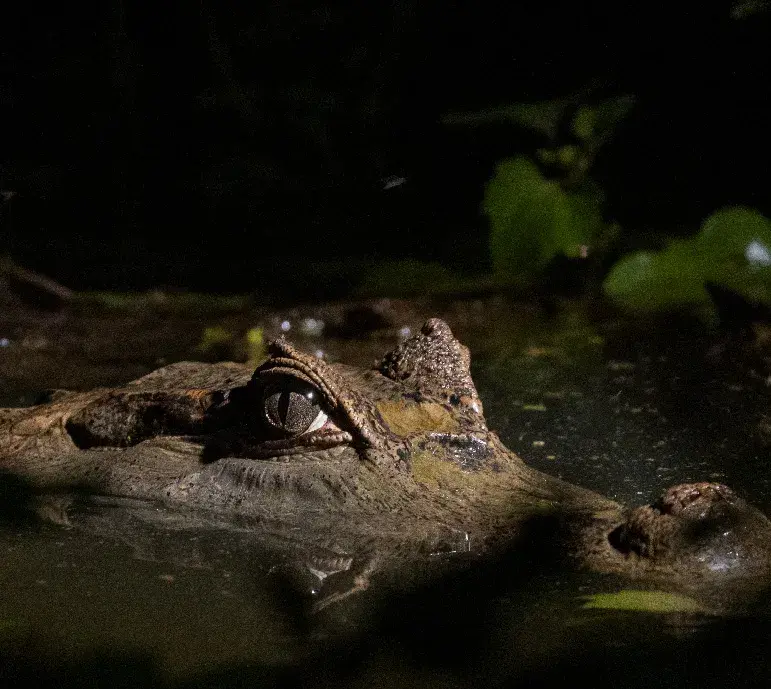
Amazon River Otters can be one of the most aggressive animals in the Amazon Rainforest, and as such can be considered a major apex predator. They are usually found patrolling areas in large groups, which makes for easier hunting. It’s common to hear them growling, whistling and play-fighting between themselves – while they will also actively fend off any Jaguars or Caimans that threaten their territories.
Overview Of Giant River Otters
And that’s all for this guide on everything you need to know about the infamous Giant River Otters of the Amazon.
One of the most famous river hunters in this massive region, Giant River Otters are sophisticated animals that usually hunt prey in packs. Known for their aggressive nature and large size, they are a highlight to spot for any traveller heading to South America – and especially in Southern Peru where they congregate around the famous oxbow lakes and slow-moving rivers of the Tambopata Jungle.
Here at Tronco Tambopata, we organise a thrilling Three Day Peruvian Amazon Jungle Tour where you’ll explore the rainforest near Puerto Maldonado. Here expert guides will help you spot Giant River Otters as well as Black Caiman during river tours, while you also have all private lodging, meals and transport all included in your tour.