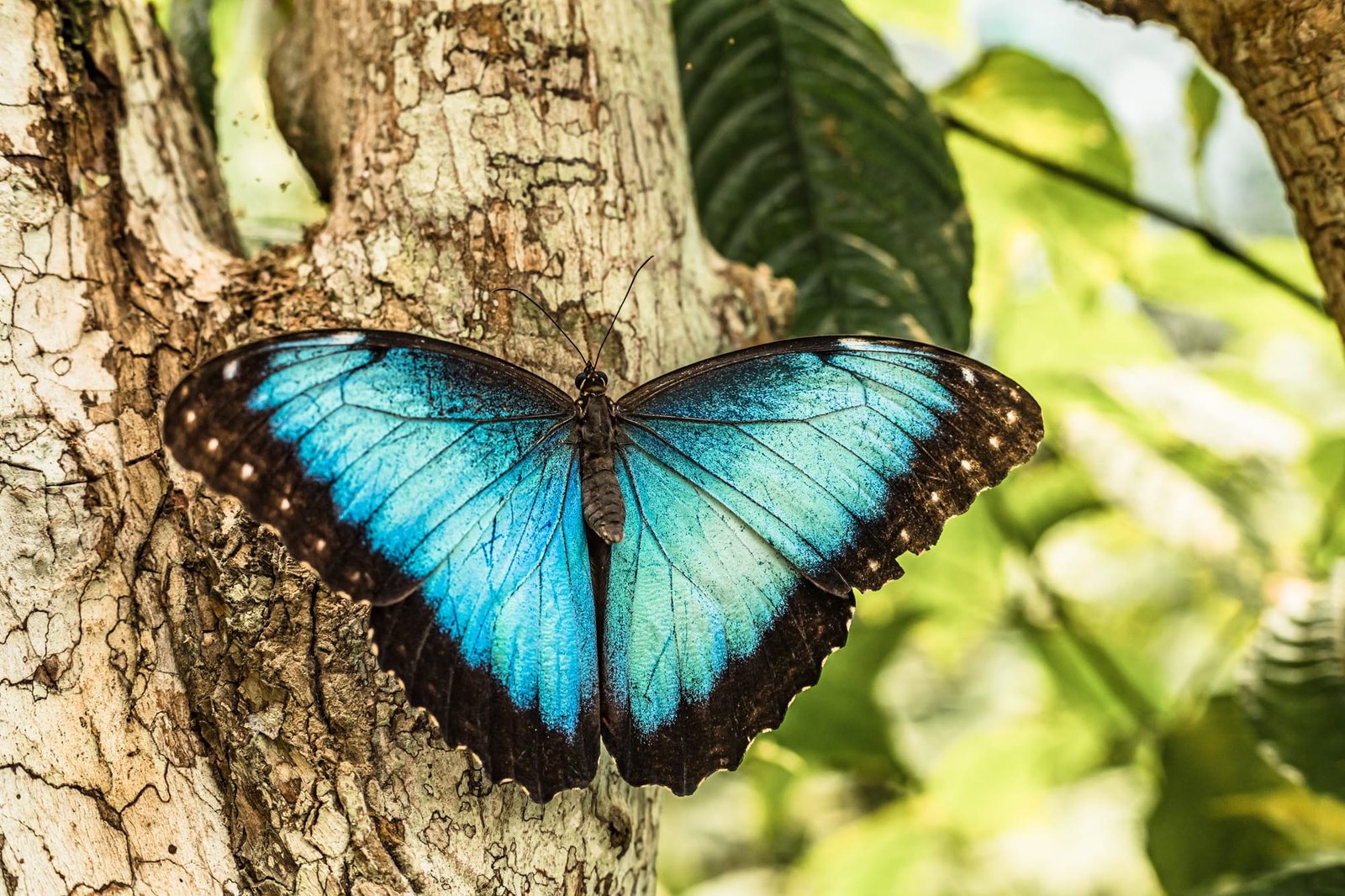
One of the most beautiful butterfly species we can see on the planet, spotting a Blue Morpho Butterfly is a really special experience.
With a giant wingspan almost four times the size of normal butterflies, it captivates anyone watching as it glides around the Amazon Jungle looking for food and a place to relax and enjoy the sunlight. Spotting one in the wild isn’t as difficult as you might think, however by knowing more about its behaviours and where they are located, we can easily increase our chances of seeing multiple Blue Morphos when heading on guided treks through the rainforest.
In this guide, we’ll explore everything that you need to know about the Blue Morpho Butterfly. This includes its key physical characteristics, behaviours, and where they are native to. As well as looking at ways to maximise your chances of spotting one in the wild, we’ll also answer your most frequently asked questions in our FAQ section.
Key Things To Know About The Blue Morpho Butterfly
Physical Characteristics Of The Blue Morpho
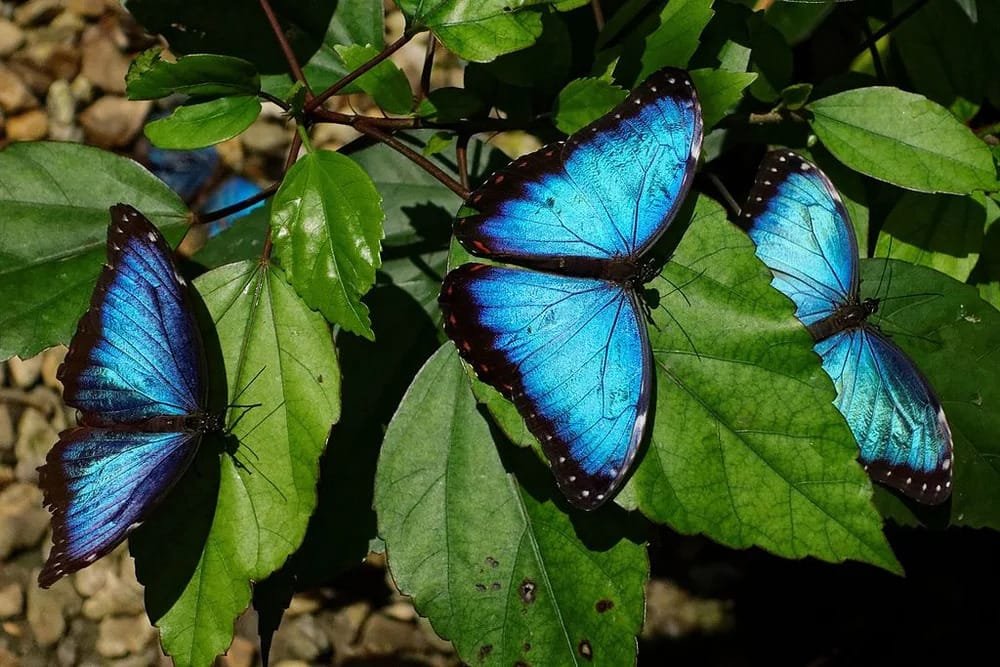
The Blue Morpho can measure up to 20cm when fully grown (usually between 12-20cm), making it one of the largest species of butterflies on the planet. Their iconic blue wings are caused by structural colours rather than by pigmentation – which is through thousands of microscopic scales that overlap each other. Males typically have brighter blue colours to attract mates and establish their territories.
At rest, their shimmering blue wings fold and instead show a dark brown underside – which mimics dead leaves and helps them to camouflage with their surroundings to avoid predators such as birds and different types of Amazonian Spiders. Unable to chew food as adults, they use a proboscis – a long straw mouthpart which allows them to drink necessary fluids – while their specialised antennae and unique chemoreceptors on their feet allow them to both smell and taste the air and surfaces they land on.
- Location: Tropical Rainforests In Central And South America
- Size: 12-20cm
- Colour: Bright Blue Wings With Black Edges (And A Dark Brown Underside)
- Lifespan: 120-140 Days For Entire Lifecycle
- Reproduction: Eggs Laid On Underside Of Leaves Which Hatch Within 7-16 Days
- Early Life: Caterpillars Are Red With Green Patches
Where Are Blue Morpho Butterflies Found?
These giant blue butterflies are almost exclusively endemic to rainforests within the Western Hemisphere. This means they are found in jungles that stretch from Mexico through Central America, and within the Amazon Rainforest of South America. Blue Morpho Butterflies typically live and stay near the forest floors where they are most sighted, however are also seen flying higher up in the canopy as they search for mates or for more direct sunlight.
How To Maximise Your Chances Of Spotting The Blue Morpho Butterfly In The Peruvian Amazon
The Peruvian Amazon Rainforest is one of the best overall places to spot Blue Morpho Butterflies of any country in the region, where they thrive in massive numbers. This is especially true in gateway cities like Puerto Maldonado, where the vibrant jungle is located very close to large river systems – and also in areas where there are natural clearings and walkways where they are easier to spot when trekking through the jungle.
Heading on a multi-day jungle tour helps to maximise chances of spotting them, as well as other rare species as your expert guide will know the best places to find them. The dry season months between May and October are usually best since Blue Morpho Butterflies love sunlight, and are most active and best sighted between the hours of 10:00am and 2:00pm.
Speak directly with our local Tambopata experts and start planning your Amazon adventure.
→Frequently Asked Questions About The Blue Morpho Butterfly
In this section we’ll now explore the most frequent questions we get about the Blue Morpho Butterfly, as well as anything else you need to know.
What Is Special About The Blue Morpho Butterfly?
As one of the largest butterfly species on the planet, the sheer size of the Blue Morpho (between 12-20cm in total wingspan size) makes it a memorable experience to see one fluttering around the rainforest. This, along with its rare and bright blue colours, makes it one of the most unique Amazon species to see – and also a very special type of butterfly to spot when out in the wild.
How Rare Is The Blue Morpho?
While the bright blue colour of this butterfly is extremely rare to find in nature and other rainforest species, the Blue Morpho Butterfly itself is actually quite common to spot in the jungles of Central and South America. This is especially true in hotspot areas like Puerto Maldonado where Blue Morphos thrive – which are known for their giant uninterrupted jungle basins and winding river systems.
What Does It Mean When You See A Blue Morpho Butterfly?
Spotting a Blue Morpho in the rainforest is considered very good luck, and it’s said that any wishes made by those when seeing one will be granted. Given this butterfly’s extreme and rapid life transition through different phases, it’s also an emblematic species that symbolises spiritual awakening, shedding old patterns and continued personal growth.
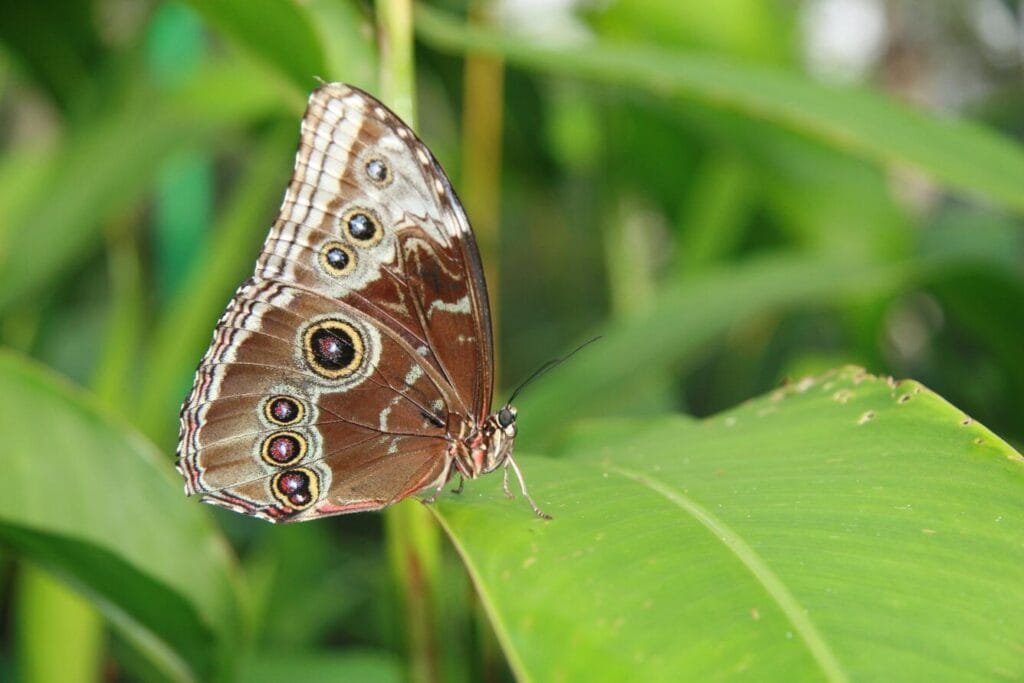
Overview Of The Blue Morpho Butterfly
And that’s all for this guide on the striking Blue Morpho Butterfly.
One of the most beautiful animals to spot within the entire Amazon Rainforest and other areas of the Western Hemisphere, these giant blue butterflies are a joy to see when trekking through the jungle. And with their own specific needs and behaviours, spotting them out in the wild is simple when heading on a jungle trek with experienced wildlife guides.
Want to spot Blue Morphos and other incredible butterflies and insects in Peru? The Tambopata Rainforest near Puerto Maldonado holds the Guinness World Record for butterfly diversity with over 25% of all species on earth being found here. During our Multi-Day Jungle Tours, our expert guides will take you to the very best places to spot both the giant Blue Morphos and other bright and colourful species.
Choose from our most popular Tambopata Peru tours and experience the Amazon's incredible wildlife, rainforest and authentic jungle lodges.