
Everything You Need To Know About The Jaguars Amazon Rainforest Species
The largest feline in the Americas and also the third-largest big cat on earth, the Jaguar is one of the most impressive animals to spot in the Amazon. Scientifically known as Panthera Onca, these powerful predators inhabit dense jungles, wetlands, riverbanks and tropical habitats throughout South and Central America – although the Peru Jaguar and species of Brazil have a higher chance of being spotted. They are best known for their extraordinary strength and distinct golden fur coats, which are covered in dark rosettes which help them camouflage among dense jungle vegetation. Adult Jaguars can measure up to 1.85m in body length, and weigh as much as 120+kg.
Unlike the majority of other big cats, Jaguars are excellent swimmers – and frequently dive into rivers to hunt prey such as Caiman, Turtles and Capybara. They have one of the strongest bite forces among all big cats, which easily pierce through skulls and tough shells of different animals. Jaguars are generally solitary animals that wander through large established territories, which famously makes encounters so rare within the dense rainforest. However certain areas in South America such as the Tambopata Rainforest of Peru and Pantanal of Brazil have the highest spotting rates – as they are occasionally seen relaxing along remote river banks during guided wildlife tours.
- Location: Tropical Rainforests, Wetlands And Riverbanks Across South And Central America
- Size: 1.1-1.85m In Body Length
- Colour: Golden-Yellow Fur With Black Rosettes
- Lifespan: Between 12-15 Years In The Wild
- Reproduction: Females Give Birth After 90-105 Days, Usually With A Litter Of 1-4 Cubs
- Early Life: Jaguar Cubs Are Born Blind And Only Open Their Eyes After Two Weeks, And Stay With Their Mothers For Up To Two Years
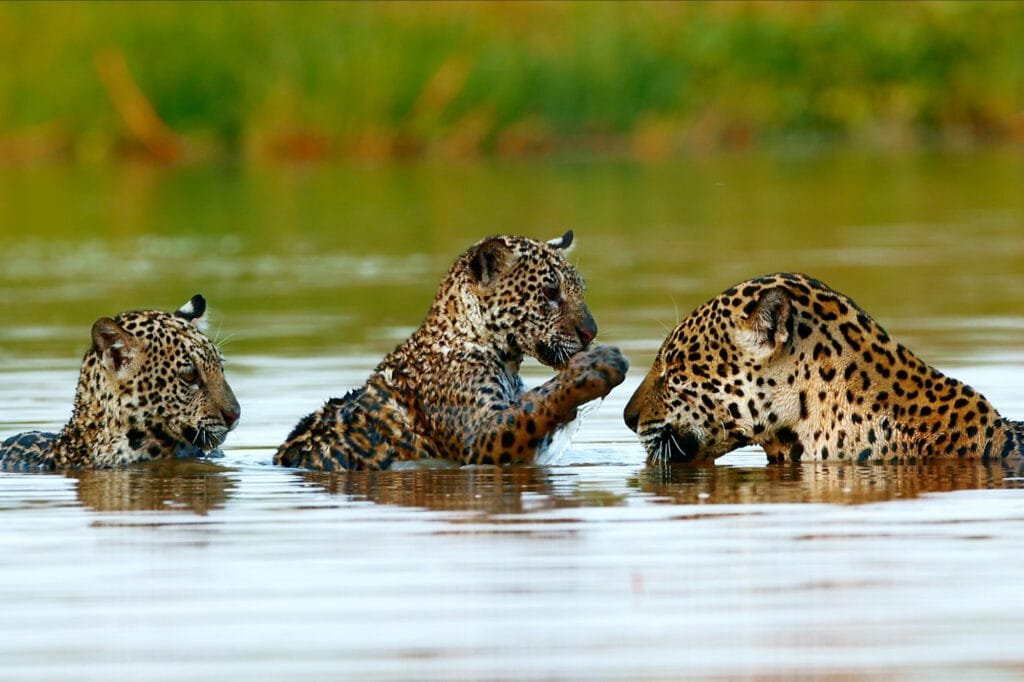
Meet The Incredible Peru Jaguar: Unique Features And Adaptations
Below let’s now take a look at what makes the Jaguar in the Peruvian Amazon and surrounding jungle so unique, allowing it to effortlessly thrive within the rainforest.
Social Behavior
Jaguars are solitary animals, spending most of their life alone aside from when mating or when females are raising cubs. Both males and females establish large territories within the rainforest, which they mark using scent, scratches on trees, and with occasional vocalisations to communicate with other Jaguars. Males generally occupy larger territories which often overlap with those of females, and actively avoid encounters with rival mates where they can. Females are highly protective mothers and raise their cubs alone – teaching them essential hunting and survival skills until they are old enough to become independent.
Habitat And Range
These apex predators are highly adaptable animals, inhabiting a variety of tropical ecosystems within South and Central America, although the Amazon Basin remains their largest stronghold. While their territories include various types of topography, their preferred areas include those with dense vegetation, abundant prey and reliable water sources – and as such ecosystems such as untouched rainforests, wetlands, swamps and grasslands are where they are most commonly spotted. Certain areas like Tambopata (Peru) and the Pantanal (Brazil) are famous for their numbers and encounters given their ideal environments, making them great destinations for tourists who want to maximise their chances of spotting them.
Diet And Hunting
Carnivorous hunters, Jaguars feast on a diverse menu of rainforest animals that include Caiman, Peccaries, Turtles, Deer and the famous Capybara of the region. Unlike other big cats such as Cheetahs which rely on speed alone, Jaguars are powerful ambush predators – which quietly stalk and approach prey before launching a sudden attack. With one of the strongest bite forces among all big cats, they deliver a fatal bite to either the skull or side of the neck for the most efficient kill. Jaguars are also skilled swimmers and often hunt near rivers, where they often pick-off aquatic animals. As apex predators, the Jaguar plays a vital role in regulating prey and the overall balance of rainforest ecosystems.
Conservation Status
Despite their fierce reputation and adaptations, Jaguars face numerous threats – including deforestation, poaching and direct conflicts with humans. These big cats are currently classified as Near Threatened by the International Union for Conservation of Nature (IUCN), with populations declining across their usual habitats. One of the biggest factors in this reduction is the expansion of agricultural land and illegal logging, where their habitats often become fragmented – making it increasingly difficult to establish and maintain their large territories, and also to find suitable mates. Thankfully, many protected national parks across Latin America provide extensive areas of untouched jungle where Jaguars can hunt, reproduce and maintain healthy populations.
How To Maximise Sightings Of Jaguars In The Amazon Rainforest
Situated in southeastern Peru, Tambopata National Reserve is a haven for wildlife enthusiasts. Its lush rainforests, winding rivers, and diverse ecosystems offer the perfect setting for a jaguar encounter. While the jaguar’s elusive nature means there are no guarantees, Tambopata is one of the best places on Earth to spot these magnificent creatures.
Tronco Tambopata Tours invites you to join our exclusive Jaguar Expedition. Led by experienced guides and naturalists, this expedition takes you deep into the heart of Tambopata National Reserve, where you’ll have the opportunity to observe jaguars and a plethora of other wildlife species in their natural habitat.
Frequently Asked Questions About The Jaguar
In this section we’ll now explore the most frequent questions we get about the Jaguar, as well as anything else you need to know.
Where Does The Jaguar Live In The Rainforest?
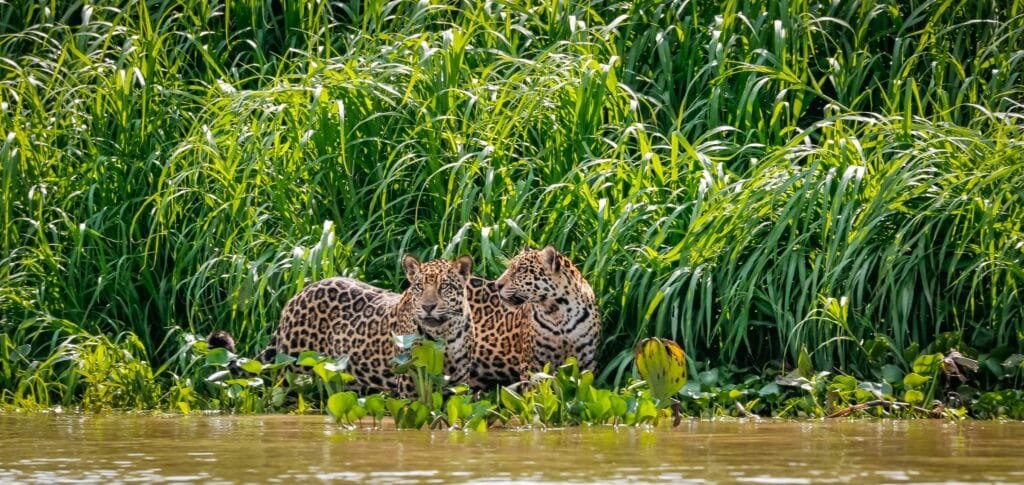
Jaguars are found entirely within the rainforests of South and Central America, with sightings recorded from as far north as Mexico and as far south as Argentina. However they mostly prefer the more dense jungle vegetation found in deeper areas of the Amazon, where they can more easily hunt, stay hidden and secure their territories. During guided tours they are mostly seen strolling or relaxing on sandy river banks, where they are not as camouflaged as they usually are within the more dense jungle vegetation.
Are There Jaguars In Peru?
Yes, Jaguars are found all across the eastern portion of Peru which is covered in dense Amazon Rainforest – making it one of the very best countries in Latin America for sightings. The Peru Jaguar is mostly found along the deeper-lying basin regions such as within Tambopata near Puerto Maldonado, and also around the Pacaya Samiria Reserve near Iquitos – although they also roam in the high jungle mountains where the Andes meet the Amazon.
How Big Are Amazonian Jaguars?
A fully grown Amazon rainforest Jaguar typically measures between 1.5-1.8m in body length, although they often exceed 2m in total when including their tail. They have compact and stocky bodies, and are also very muscular – which allows them to effortlessly sprint, swim and hunt prey regardless of the environment or challenges faced. Adult female jaguars usually weigh between 60-90kg, while males often weigh anywhere from 90-120kg.
Overview Of The Jaguar Amazon Rainforest Predator
And that’s all for this guide on everything you need to know about the incredible Jaguar.
Famous for its beautiful golden fur and black spots, this apex predator is one of the very best at what it does: hunting while remaining hidden with the dense Amazon vegetation. And while the Jaguar Amazon Rainforest species remain elusive and hard to spot, with a deeper and longer jungle tour there’s a higher chance of spotting them – given untouched rainforest and less human presence helps to avoid disrupting their day to day activities.
The Tambopata National Reserve in Peru is famous for its higher chances of spotting Jaguars, and especially on longer, multi-day tours. Here at Tronco Tambopata, Our Five Day Amazon Tour offers travellers both a better chance of seeing this incredible apex predator, along with other exotic rainforest animals such as Giant River Otters, Monkeys, Sloths, Macaw Parrots and Capybara.